
Understanding Proof of Work Mining in Cryptocurrencies

In the ever-evolving landscape of digital currencies, the mechanisms that underpin their security and functionality are vital to their success and integrity. One such mechanism gaining significant attention is Proof of Work (PoW) mining. As one of the earliest consensus algorithms to emerge in the cryptocurrency arena, PoW has been instrumental in shaping the blockchain technology we know today. But what exactly is Proof of Work, and why is it so crucial for cryptocurrencies like Bitcoin? In this article, we will delve deep into the fundamentals of Proof of Work mining, exploring its processes, advantages, and the challenges it faces in a rapidly advancing technological environment. Whether you’re a seasoned investor, a blockchain enthusiast, or just curious about the inner workings of cryptocurrencies, this comprehensive guide will provide you with a clear understanding of how Proof of Work functions and why it remains a cornerstone of the crypto ecosystem. Join us as we demystify the complexities of PoW and its vital role in securing the decentralized financial future.
Table of Contents
- Understanding the Mechanics of Proof of Work Mining in Cryptocurrencies
- Evaluating the Environmental Impact of Proof of Work Systems
- Maximizing Mining Efficiency: Strategies and Tools for Success
- Future Trends and Innovations in Proof of Work Mining Technologies
- Closing Remarks

Understanding the Mechanics of Proof of Work Mining in Cryptocurrencies
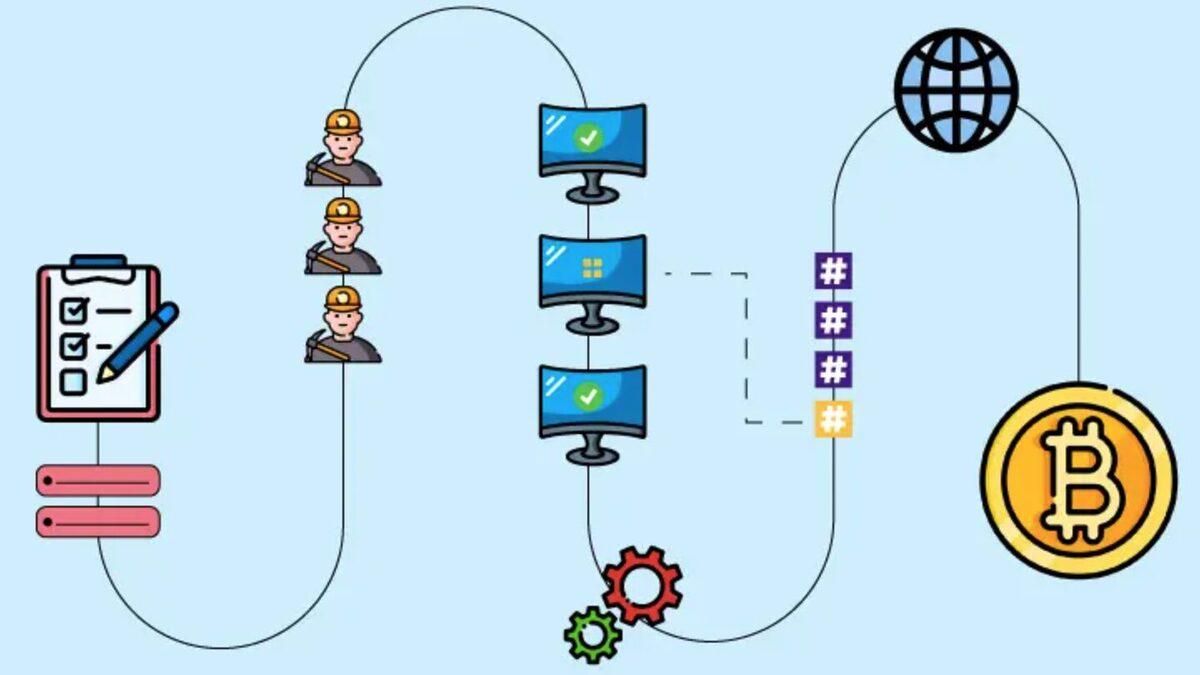
Proof of Work (PoW) is a consensus mechanism that underpins the security and integrity of numerous cryptocurrencies, including Bitcoin. At its core, PoW requires participants, known as miners, to perform complex mathematical calculations to validate transactions and add them to the blockchain. This process is resource-intensive, requiring substantial computational power and energy consumption. Miners compete to solve cryptographic puzzles, and the first to do so gets to add the next block to the chain, receiving a block reward in return. This not only incentivizes miners to participate but also fortifies the network against potential attacks, as altering any part of the blockchain would require enormous computational resources to re-mine all subsequent blocks.
- Decentralization: Promotes a distributed network without a single point of failure.
- Security: Ensures high levels of security through computational difficulty.
- Incentives: Provides economic rewards to miners for their contributions.
One of the primary challenges of PoW is its environmental impact due to the vast amounts of electricity required for mining activities. As miners strive for efficiency, they often turn to renewable energy sources or more efficient mining hardware to mitigate their ecological footprint. Furthermore, as the mining process becomes more competitive, the difficulty of the puzzles adjusts, ensuring that the average time between blocks remains fairly consistent. The balance of these mechanics not only fosters a robust ecosystem but also encourages innovation in hardware and energy efficiency within the cryptographic community.
Evaluating the Environmental Impact of Proof of Work Systems
The environmental ramifications of Proof of Work (PoW) systems have become a focal point of discourse in cryptocurrency circles. Mining activities, which utilize vast amounts of computational power to solve complex mathematical problems, often lead to substantial energy consumption. This demand raises critical questions about the sustainability of cryptocurrencies that operate on PoW mechanisms. Notably, a significant portion of this energy comes from non-renewable sources, contributing to carbon emissions and exacerbating climate change challenges. Unlike proof-of-stake systems that require significantly less energy, PoW’s reliance on energy-intensive infrastructures often provokes concern among environmentally conscious stakeholders.
To quantify the impact, it’s useful to examine some key statistics on energy usage and carbon footprint across popular PoW cryptocurrencies:
| Cryptocurrency | Estimated Annual Energy Consumption (TWh) | Approximate Carbon Emission (Metric Tons) |
|---|---|---|
| Bitcoin | 95.0 | 43.0 million |
| Ethereum (before transitioning to PoS) | 22.0 | 10.0 million |
| Litecoin | 4.0 | 1.8 million |
As illustrated, the stark figures indicate a significant burden on the environment, prompting both developers and users to reassess their roles in promoting sustainability. Awareness is blossoming around alternatives to PoW, such as renewable energy solutions that miners might consider to mitigate their ecological footprint. Moreover, the continued evolution of blockchain technology is steering discussions toward more efficient consensus mechanisms that could redefine the future of cryptocurrency mining.
Maximizing Mining Efficiency: Strategies and Tools for Success

In the realm of cryptocurrency, mastering proof of work mining can dramatically increase operational efficiency and profitability. Understanding the mechanics behind this system is crucial for miners striving to optimize their efforts. Key strategies include:
- Investing in Advanced Hardware: Utilize ASIC miners specifically designed for performance, energy-efficiency, and longevity.
- Effective Cooling Solutions: Implement robust cooling systems to maintain optimal temperatures and prolong the lifespan of equipment.
- Optimizing Power Consumption: Choose energy sources that provide the best rates, and consider renewable options to reduce costs.
- Strategic Pool Joining: Join mining pools to enhance chances of earning rewards through collaborative efforts.
Moreover, utilizing software tools designed to streamline mining operations can yield significant benefits. These tools can help monitor performance, adjust settings, and maximize output. A few exemplary utilities include:
| Tool | Description |
|---|---|
| CGMiner | Highly customizable mining software that is compatible with multiple hardware setups. |
| NiceHash | A marketplace for hashing power that allows miners to sell their computational power. |
| Mining Pool Stats | Comprehensive tool for tracking pool performance and profitability metrics. |
Future Trends and Innovations in Proof of Work Mining Technologies
As the cryptocurrency landscape evolves, the quest for more efficient and sustainable Proof of Work (PoW) mining methods is at the forefront of innovation. Future technologies aim to enhance mining performance while minimizing environmental impact. Some notable trends include:
- Hybrid Mining Systems: Combining PoW with Proof of Stake (PoS) or other consensus mechanisms may optimize energy consumption and improve network security.
- Energy-efficient ASICs: The development of Application-Specific Integrated Circuits (ASICs) designed for higher energy efficiency and lower heat generation will become essential as regulatory scrutiny on energy use increases.
- Renewable Energy Utilization: A shift towards solar, wind, and hydroelectric power sources will not only reduce costs but also address the increasing demand for cleaner mining practices.
Additionally, innovative software solutions are making waves in the PoW space. Strategies like:
- Pooling & Smart Contracts: Enhanced mining pools utilizing smart contracts can facilitate fairer profit distribution and incentivize miners to contribute to the network.
- Algorithimic Adjustments: Improved mining algorithms that dynamically adjust difficulty based on real-time data can lead to optimized performance and resource allocation.
- Geolocation-based Mining: Targeted strategies to deploy mining operations in optimal geographical locations can eliminate latency and reduce operational costs.
| Trend | Description |
|---|---|
| Hybrid Mining Systems | Integrates PoW with PoS for efficiency. |
| Energy-efficient ASICs | Lower energy use and heat management. |
| Renewable Energy | Utilizes green energy sources to mine. |
| Smart Contracts | Facilitates fair mining pool distributions. |
| Dynamic Difficulty Algorithms | Optimizes performance through real-time adjustment. |
| Geolocation Mining | Deploys mining in optimal zones for efficiency. |
Closing Remarks
understanding Proof of Work mining is essential for anyone looking to delve into the world of cryptocurrencies. This foundational mechanism not only secures networks and validates transactions but also represents the intricate dance between computational power and energy consumption. As the landscape of digital currencies evolves, it’s crucial to stay informed about these mechanisms, their implications for scalability, security, and environmental sustainability.
Whether you’re a seasoned investor or just beginning your journey into crypto, grasping the principles of Proof of Work will equip you with the knowledge to navigate this dynamic field with confidence. As blockchain technology continues to advance and alternative consensus mechanisms emerge, remaining adaptable and informed will be key to leveraging the potential of digital assets.
Thank you for joining us in exploring this fascinating topic. If you have further questions or insights about Proof of Work mining or other aspects of cryptocurrencies, we encourage you to share your thoughts in the comments below. Happy mining!
